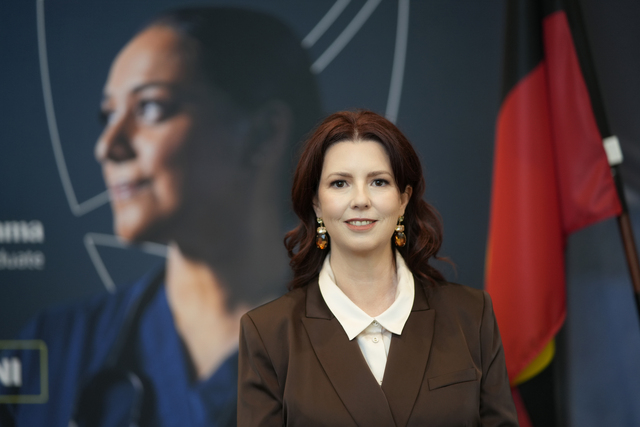
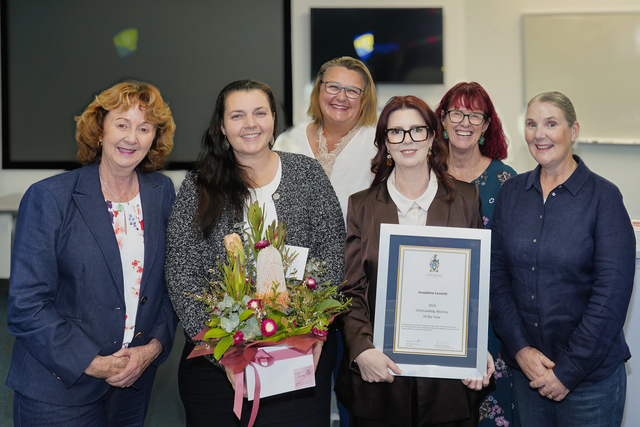
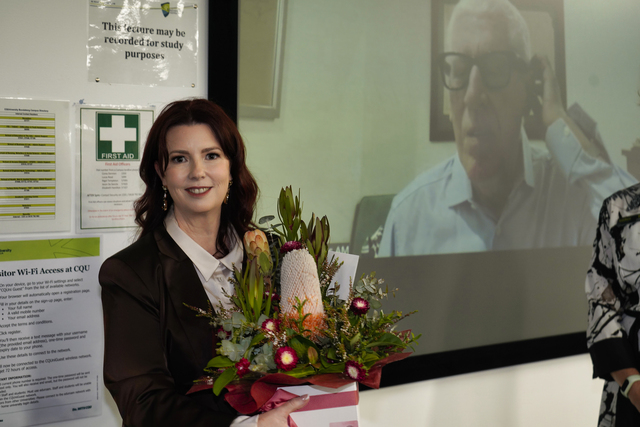
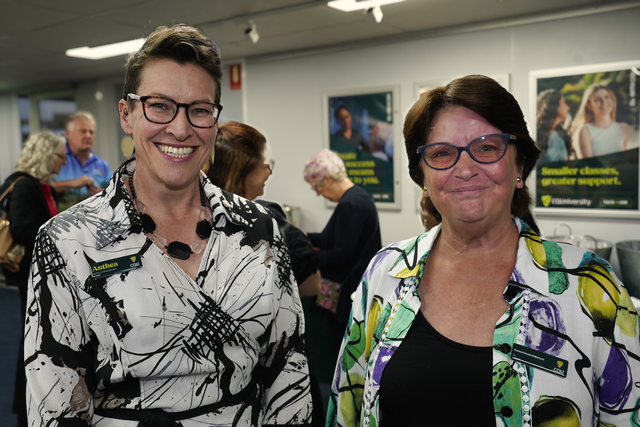
Receiving the 2026 Outstanding Alumnus of the Year Award from CQ University Australia is both an honour and an opportunity for reflection.
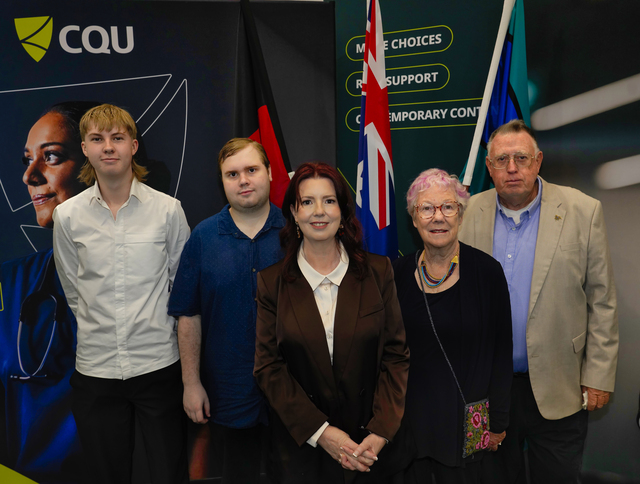
Before the award presentation, I had the opportunity to meet CQUniversity chancellor Graeme Innes AM.
Mr Innes is a former Human Rights Commissioner, lawyer and lifelong advocate for the rights of people with disabilities.
Born blind, he has consistently challenged assumptions about capacity, participation, and inclusion.
He has said that discrimination would end if individuals stopped making unfair assumptions.
This idea is simple yet powerful. Much of what occurs within our systems is shaped by assumptions: about who is credible, who is capable, who needs protection and who is at risk.
One of my proudest achievements is establishing Bundaberg Street Law.
What began as a response to barriers in our local community has grown into an independent legal practice, registered with the Queensland Law Society and
supported by a governing board and dedicated volunteer lawyers and law students, many from CQUniversity.
Today, the service offers pro bono legal clinics several times a week, providing face-to-face support to those who might otherwise struggle to access legal processes.
However, the work has never been solely about legal advice. It is grounded in four clear principles: accessibility, integration, early intervention and capability.
Accessibility means meeting people where they are, both physically and practically.
Integration recognises that legal issues rarely occur in isolation from housing, health, or financial stress, and addressing them together is crucial.
Early intervention recognises that timely support can fundamentally change client outcomes.
Capability involves equipping people with the knowledge and confidence to engage with systems independently, fostering self-reliance rather than dependency.
Together, these principles embody a commitment to civic responsibility.
The word “civic” comes from the Latin civicus, meaning “relating to a citizen,” and civitas, meaning “community” or “the body of citizens.”
Civic responsibility is about how we participate in our community.
It is not limited to formal acts such as voting or complying with the law. It also includes, for example, how we respond when systems do not function as they should and whether we are willing to take responsibility for improving them.
Closely connected to this are human rights.
Human rights are universal, inalienable, and indivisible.
They exist regardless of circumstance, but their realisation is not automatic.
Rights depend on systems to give them effect and on individuals within those systems to uphold them.
This is where civic responsibility and human rights intersect.
Human rights set expectations by articulating what people are entitled to: fairness, dignity, participation, and protection.
Civic responsibility determines whether these expectations are realised in practice.
When systems function well, this relationship is often invisible.
Rights are upheld, and civic responsibility is exercised quietly through effective institutions and daily decisions.
When systems fail, the connection becomes clear.
Gaps emerge.
Barriers become visible.
Individuals are often left to navigate complexity without the support they need.
In those moments, civic responsibility becomes active. It is the decision by individuals, organisations and communities to respond, step in, and ensure people
are not excluded from processes that affect their lives.
My work leading to this award has focused on addressing that intersection.
Rather than replacing systems, I have aimed to strengthen participation within them.
Instead of creating dependency, I have worked to build capability, so people can understand processes, engage confidently and exercise their rights meaningfully.
Receiving this recognition is a privilege, but more importantly, it is a reminder to me of the ongoing, civic responsibility it carries.