
With the fairly chilly weather around, I believe it is appropriate to discuss frost effects in our current chickpea crops and the damage it can do.
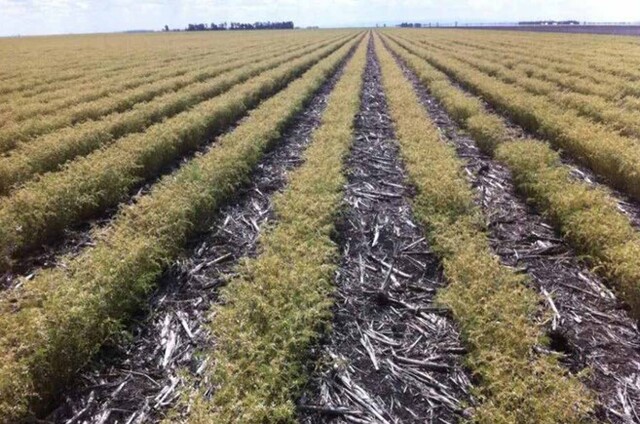
The frosted chickpea crop photo attached has been around for many years, and it looked like every plant was nearly dead from a snapper of a sudden frost event.
Most of the plants did recover, sort of, however many growers in the area did believe it had a reducing effect on eventual yields around that Darling Downs very flat country.
I have written about crops being “cold hardened” before, and it simply means that our early bouts of cold weather and frosts are minor or not as severe, which allows all our winter crops like wheat, barley, and our pulses to adapt steadily to the change of lower temperatures around the paddocks.
Where the lasting and very visible damage comes in is when the temperatures go from, say, a balmy 25 degrees maximum and 15 degrees minimum to suddenly dropping to 15 degrees max and then below 0 degrees, or much less, in the early mornings, like we have had lately.
This cold shock event can bleach our cereals fairly white, twist the leaves around, flatten the plant, and similarly affect chickpeas and even faba beans with branch twisting and that brown discolouration a few days later, as you can see in this photo.
Topography does play a part, and just like a water stream, frosty conditions and cold air will follow the contours to the lowest paddock point.
Along with that, south- or north-facing slopes can all be part of a nasty frost action.
What can you do about it?
And the answer is, not much.
Varietal selection may give you some protection, and there have been long-held beliefs from some nutritionists that better plant nutrition, such as the use of silicates, can develop a better or thicker cell wall to resist freezing temperatures.
Also, adequate potassium levels in the plant have shown reductions in frost impact.
The farming systems we have heavily adopted encourage retention of our previous crops’ stubble, and this can also exacerbate frost effects in chickpea crops due to that reduction in the soil’s heat blanket buildup.
Drier soils do not have as much heat-radiating ability, whereas conversely, bare soils free of stubble allow for better heat buildup during the day.
Dry soils may not have as much soil moisture in them to stage a recovery at times either.
So, there is plenty to think about when it comes to frosting in the vegetative stage and frost implications.
What about frost in the reproductive stages—on flowers and pods—of our favourite winter pulse crop, chickpeas?
This is when real, big damage to yields can result, with a late-season or springtime frost event, as this weather event can really wreak havoc at this stage of reproductive development and affect subsequent yields.
After many decades of inspecting heaps of chickpea crops, those frosted pods are very visible in a still-green crop and do make everyone nervous about yield loss.
Mind you, when I present my checking report to growers or other agros, which shows that we have half a dozen white pods (frosted and empty) per square metre at different parts of the paddock, there is much hand-wringing and concern shown.
Then I share the knowledge that there are over 400 to 500 good pods in a square metre of crop across the paddock.
Not all the time, I must point out, however I suggest counting your full seed pods is very good therapy in these situations.
Not many folks count the full pods per metre of a row, and the white-coloured empty ones—from frost or Helicoverpa larvae—do stand out so much more in a green, bulky crop of chickpeas.
Look after your pulse crops, everybody, as they fit so well in our northern farming systems.