
No doubt about it, “when you are on a good thing, stick to it” or variations as such, are a major saying by many of us over the years or decades.
Of course, now I am going to point out that don’t stick to it is the best agronomic practice when talking of the many crops we like to grow in this Northern Region.
Why do I quote this saying?
Firstly, we learnt the hard way, well before those Zero or Minimum tillage years, that we were losing the battle by just growing winter cereal crops most seasons.
However, we just weren’t keeping a lot of moisture in the soil profile for growing regular summer crops, especially for western areas in particular.
Good summer seasonal rain events always seemed to occur in the year you did not grow a summer crop.
However, wheat on wheat-on-wheat crops with no rotational crops or paddock spelling naturally meant diseases (like Crown Rot) and weeds (like Wild Oats) were really beating us.
I won’t bang on about zero tillage adoption benefits; however, it did give us better options for a possible summer crop with more saved moisture in the soil profile.
Let’s go back to where our first commercial variety of chickpeas was released in Queensland around the mid-1970s and was named Tyson.
Certainly, there had been various interests by early researchers in our Australian grain scene in the late 1800s with this new crop alternative, with chickpea planting seed sourced from India having mixed enthusiasm with results.
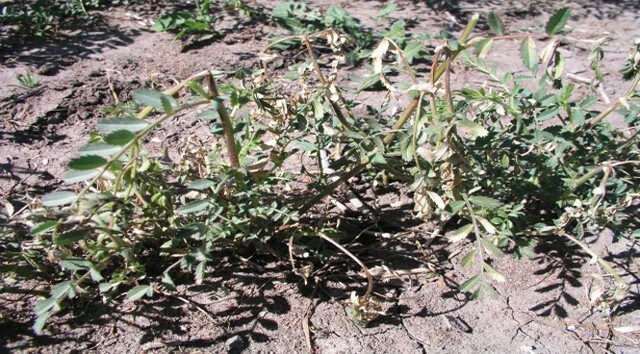
I would have to say my memories of Tyson chickpeas were fairly negative, especially with the soil disease Phytophthora really making a mess of chickpea yields, with lower wet spots in paddocks causing severe plant necrosis or death.
Soybeans and lack of rotation had been through this same soil disease early in the 1960s and 70s decades, so it was no surprise to me to see Phytophthora in this new winter legume pulse crop.
The yellowing at the top of the chickpea plant was an iron deficiency evidently, and many of us very young agros had not even heard of iron deficiency from our deep black or brown soils.
Move forward to current day varieties, and the size or hectares planted of our desi chickpea crop as a winter crop is quite staggering.
Mostly the desi type of chickpeas, grown in this northern region of Australia, are a very important part of our farming systems.
For many years, Steve Powles from UWA has said in relation to weed control, when you are on a good thing don’t stick to it.
He is quite correctly referring to the practice of rotating the herbicide mode of actions in our fight against herbicide resistance.
Rightly so Steve was, as many have now experienced this phenomenon using the same mode of action over and over again and not controlling the probable herbicide resistant spray survivors.
From NSW Department of Agriculture pathologist Kevin Moore, he has the same opinion in chickpea rotations.
Chickpeas on chickpeas is not good and even worse if you go for three crops in a row.
Particularly with foliar disease like Ascochyta Blight evolving and becoming more aggressive and so overcoming resistance levels in some varieties.
Apart from a handy history lesson, what I am encouraging growers and agronomists to do is not take for granted that your low disease pressure last year in your winter pulse crop is going to be low again this coming winter season.
When you are on a good thing, don’t stick to it should be your motto in crop rotation plans or your pesticide mode of action applications.
Mix and rotate is a fairly simple quote; however, it is an important piece of advice in farming.