
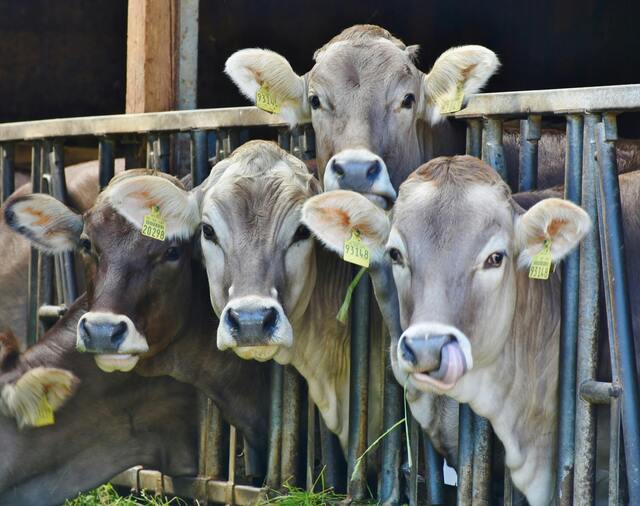
Work starts on $500 million program to beef up key cattle freight routes in CQ
Construction has officially started on the first project under the Australian and Queensland Governments landmark $500 million Queensland Beef Roads program, which will progressively upgrade and seal critical freight routes across an area the size of Great Britain.
The $47.5 million early works package begins with sealing a priority section of Clermont–Alpha Road, approximately 89 kilometres north of Alpha in the Barcaldine Region.
This is the first step in a 10-year investment strategy to improve transport efficiency, safety, and resilience for Queensland’s world-class beef industry.
Stronger export markets accommodate record Australian beef production
With ongoing increases in cattle slaughter and high carcass weights, Australia’s 2025 beef production is set to break new ground with record volumes, according to a new report by agribusiness banking specialist Rabobank.
Beef exports though are also up for the year – and will potentially also reach record levels – well and truly accommodating the increased supply.
In its Q4 2025 Global Beef Quarterly, the bank’s RaboResearch division estimates 2025 Australian production will be approximately 2.9 million metric tonnes, an 11 per cent increase on 2024 volumes and a new record.
Farmers Urged to Register with Rural Aid as Storm Season Intensifies
Leading agricultural charity Rural Aid is urging farmers across Australia to register for support as the summer storm season continues to deliver destructive and unpredictable weather.
The charity is also urging the community to lend their support. Donations made through the Rural Aid website help ensure farmers impacted by storms and the challenges of 2025 can access relief quickly, rebuild their farms, and keep Australia’s food supply strong.
Beef production hits record highs as lamb and mutton turnoff slows
Australia’s cattle industry continues to set new benchmarks, with the latest Australian Bureau of Statistics (ABS) figures confirming record beef production for the September quarter.
At the same time, sheep and lamb slaughter has eased significantly following last year’s peak turnoff.
Meat & Livestock Australia (MLA)’s Manager for Market Information, Stephen Bignell said that strong seasonal conditions across northern Australia have underpinned the surge in cattle numbers.
Australian red meat industry earns highest-ever trust as red meat increasers surge
Meat & Livestock Australia (MLA) has released the findings of its 2025 Community Sentiment Research, revealing a significant uplift in public trust and a notable increase in consumers claiming to eat more red meat.
Conducted annually since 2010 by strategic consultancy firm Pollinate on behalf of MLA, the research measures and tracks consumer sentiment in the community towards the Australian red meat industry.
For the first time since tracking began, more Australians are claiming to be increasing their red meat intake than reducing it.
Volatile global pulse market transforming
The global pulse market is experiencing a significant shift – driven by increased use as an ingredient in innovative food products, as well as changing trade flows and geopolitics – Rabobank says recently-released research.
In its Pulse check: global pulse industry trends and outlook report, the bank’s RaboResearch division says the transformation in the global pulse sector is being influenced by a range of factors, including changes in consumer preferences, import demand and production patterns.
Pulses in some markets are shifting from being primarily a staple food to “become a versatile ingredient used well beyond alternative meat products”, the report says.
Poor affordability to pressure global fertiliser demand in 2026
Global fertiliser markets are entering a new phase of contraction, as rising prices begin to weigh on demand, agribusiness specialist Rabobank says in new research.
In its recently-released Semi-annual Fertiliser Outlook, the bank’s RaboResearch division says affordability of agricultural fertiliser globally – as reflected in Rabo’s Fertiliser Affordability Index – is clearly beginning to decline.
With agricultural commodity prices having largely remained stable since the start of the year, this decline in affordability is primarily due to an increase in global fertiliser prices, the report says.