No doubt about it, I have certainly learned over the years, or decades, of agronomy that our cropping endeavours can bring out the worst in the pests and diseases we try to control.
First off was Helicoverpa armigera resistance to every insecticide we were using in the late 1980s cropping scene, because we used these excellent new insecticides too much, time after time, with no rotation of modes of action, or MoA.
We deserved to get burnt, and we did.
Along came herbicide resistance to our most important herbicide, glyphosate, with our popular conservation farming practices around the 2000s.
What did we get with constant single mode-of-action applications?
Yep, increasing levels of Group 9 mode-of-action resistance, which is glyphosate’s MoA, across a whole host of weeds, or plants out of place.
Of course, our crop diseases are fast heading that way as well.
What I would like to address, or perhaps remind you of, are key points in our insect war, and it is a war.
They want to eat or reduce our crop qualities, and we need to stop them, particularly both our Helicoverpa species.
Our most valuable insecticides, like chlorantraniliprole, emamectin, methoxyfenozide/spinetoram, plus some older generation ones like indoxacarb, carbamates and various synthetic pyrethroids, to name a few, have done a fairly good job of keeping us insect-free in most of our crops.
However, they will not last forever against our Helicoverpa insect enemy, and resistance will develop to these molecules.
There is one insecticide that I have not mentioned yet, and that is NPV, or nucleopolyhedrosis virus, a biological insecticide that has been around for over 30 years, I recall.
Now, this wonderful, safe, effective biological control agent needs to be ingested by Helicoverpa larvae, or grubs, in your crops, so application, timing and environmental temperatures are all important parts of this scenario.
Now here is some news for you: no matter how badly we apply many pesticides sometimes, they mostly do work, particularly if you don’t cut the rates.
You just need to follow a few rules, except that when busy or pushed for time, these key rules get forgotten and results suffer.
The first major issue I ever learnt about NPV effectiveness is that the size of larvae really, really matters.
Certainly, I bang on about weed control with herbicides like glyphosate, when going from 4-leaf to 6-leaf size and therefore seeing many more weed survivors.
So too with our Helicoverpa larvae.
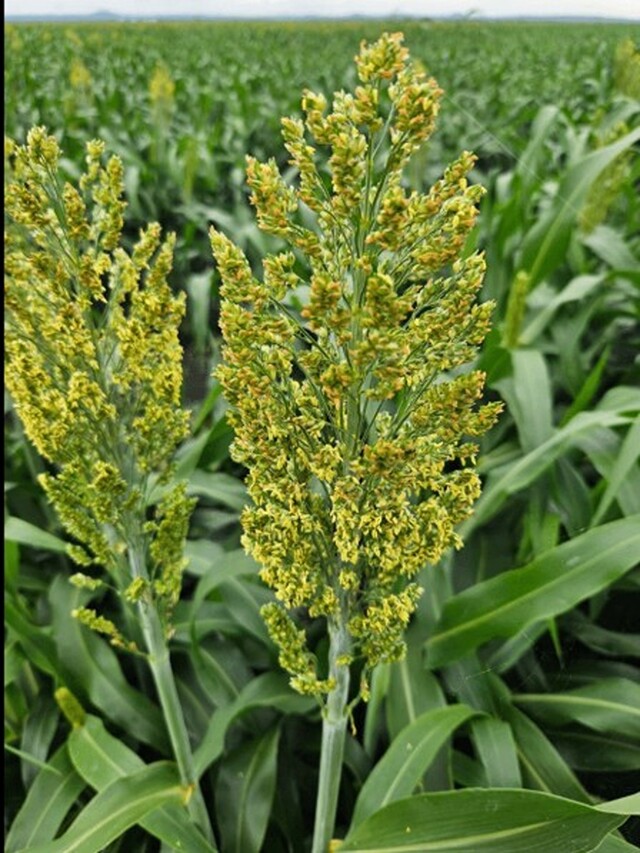
When I say 1st or 2nd instar (before 8 mm in length) is the best target size for NPV, you certainly need to be on the ball with early scouting, right at the start of these green heads just coming out of the plant boot.
Of course, temperature plays a part in the feeding habits of these larvae, especially when temps are below 18°C — it certainly reduces larval activity and feeding.
This whole temperature and feeding discussion is being shifted by our current earlier planting dates of our grain sorghum crops, so I suggest you and your bucket conduct very regular early scouting in your detection of these very small larvae.
You then need to direct any spray decisions with NPV at those warmer times of day and hence during more active feeding times, for above-threshold situations.
We cannot just keep using our conventional insecticides all the time and leaving survivors, which we do, so this valuable NPV biological insecticide is something we need to master and use effectively.
We certainly need to be able to rotate all our current MoA and use them correctly and effectively on insects like the Helicoverpa species, otherwise insect resistance is going to win the war and our cropping abilities and profitability are going to suffer.
Look after your crops, and many times the best fertiliser, and nowadays insect control, is a farmer’s or their agronomist’s regular and timely footsteps in the paddock.